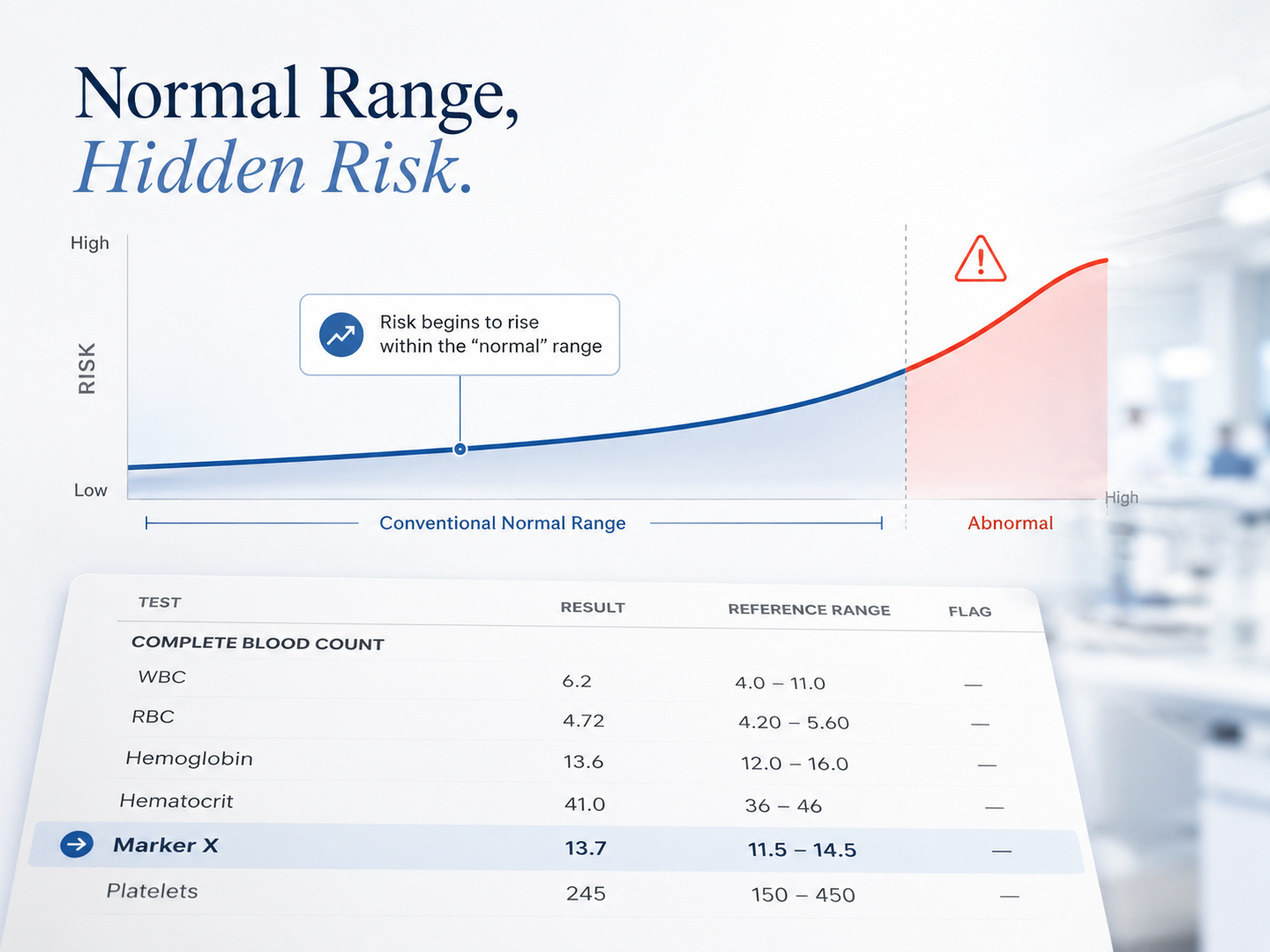
There's a CBC marker you see every day. You're underusing it.

The CBC Marker Practitioners Were Never Taught to Read

One marker. Dozens of outcome studies. A clinical clue hiding in every CBC you already have.
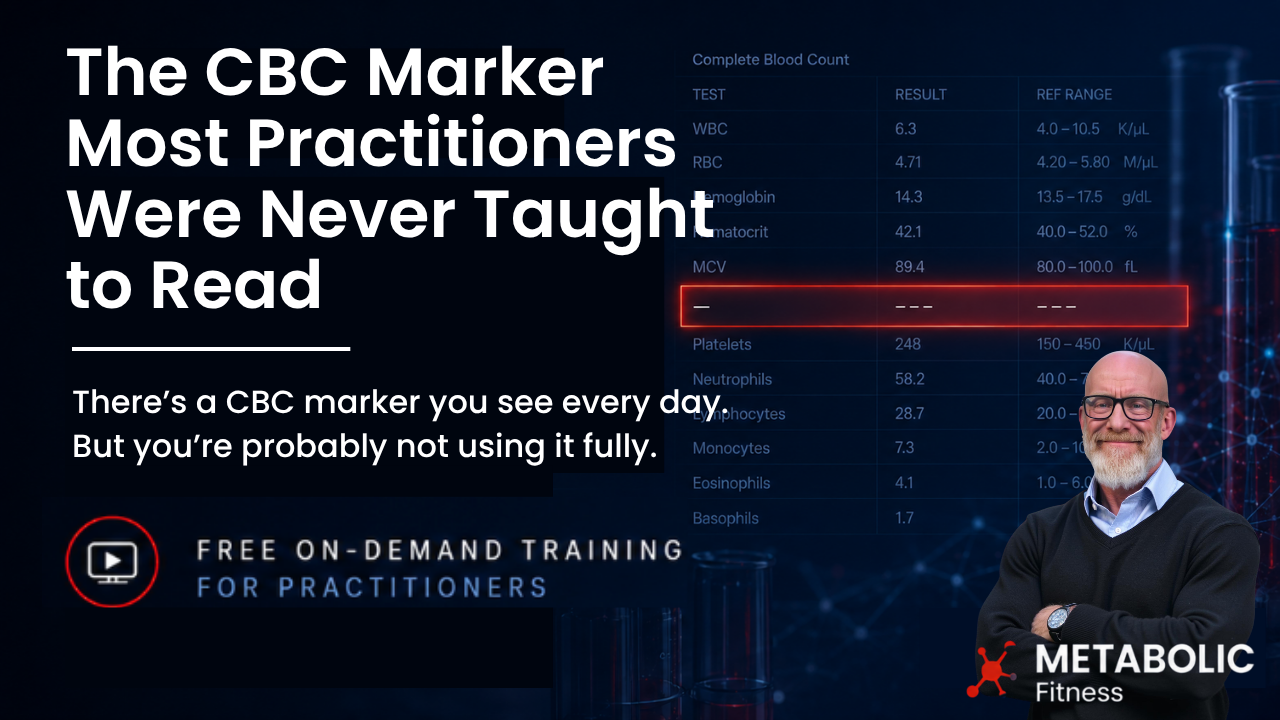
FREE ON-DEMAND TRAINING FOR PRACTITIONERS

You're already ordering this marker. You're about to see it differently.

Most practitioners were never taught how much one routine CBC marker can actually tell them. This training shows you what the literature says, where the real risk zone begins, and how to use it on your very next panel.

What If One Marker On The CBC Is Already Telling You More Than You Realize?

While much of the functional medicine world keeps pushing practitioners toward specialty tests that cost hundreds of dollars, the standard blood chemistry panel your patients already have has been quietly accumulating outcome literature most of us were never taught to extract.

Evidence-Based 

Outcome literature behind the interpretation, not inherited ranges

Scientifically Validated 

Large cohort data tied to real clinical outcomes

Already on a CBC

 No extra testing, no extra cost, no waiting for another panel

Clinically actionable

Helps you know what to investigate next and what not to ignore

Immediately Useful

A Monday-morning playbook for the labs already in your chart

Most practitioners move past this marker in seconds.
This training shows you why that is a mistake.

The Question Most Practitioners Were Never Told To Ask
The functional medicine industry spent years teaching practitioners to chase more testing, more panels, and more interpretations layered on top of interpretations. Dr. Walsh did the same thing early in his career. He ordered the tests. He followed the teaching. He trusted the system.

Here is what he found after years of tracing where these interpretations actually came from:

  • Many commonly used ranges are not clearly tied to outcome literature
  • Some confidently taught interpretations are far less defensible than practitioners assume
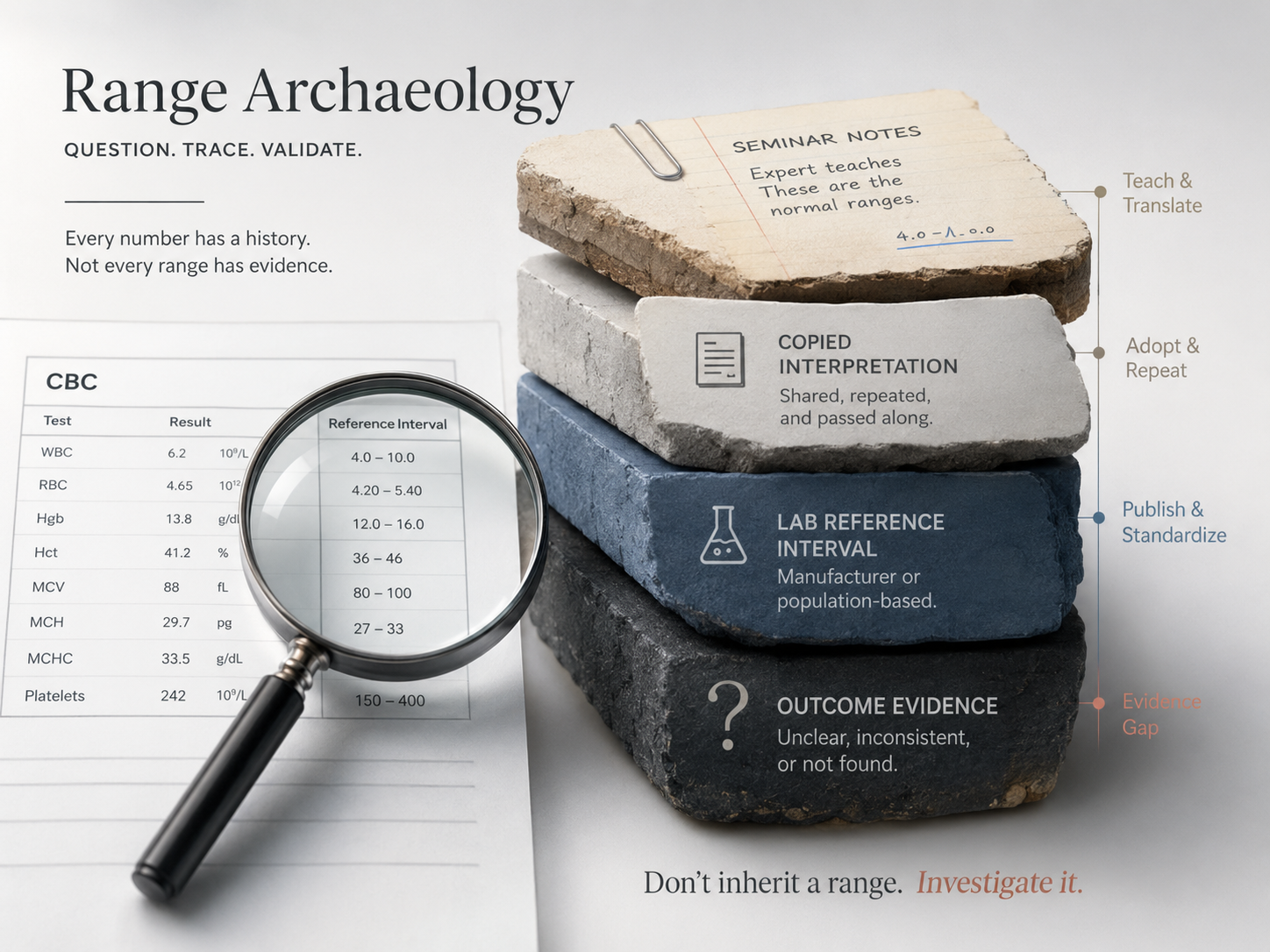
  • Labs and seminar systems often passed along ranges without a clear evidentiary trail
  • A familiar routine panel was carrying more useful information than most specialty testing gave him

He had ordered the tests. He had believed in them. He had recommended them to patients. Then he started asking a better question:


Where did this range come from? What outcome study produced this number?

Too often, the answer led nowhere. Ranges had been repeated, taught, copied, and passed around until they sounded established. But when he went looking for the actual literature behind them, much of what sounded certain became much harder to defend.

That investigation led him to build what he could not find: blood chemistry interpretation grounded in outcome literature, with a paper behind the numbers. And in the process, he discovered something that changed how he practices entirely:

Meanwhile, one ordinary marker on the CBC, read correctly, was already pointing toward:
  • Greater long-term risk before conventional flags appear
  • Cardiovascular burden beyond the usual markers practitioners watch
  • Disease progression across multiple conditions
  • A deeper physiologic story than “just anemia”
  • A better next question before ordering another expensive test
  • And so much more...
You do not need another panel to start seeing more. You need a better read on the one already in front of you.

What You'll Learn In This Free Training
In this 8-minute training, you'll discover:

1

The One CBC Marker Most Practitioners See But Rarely Fully Use
Why a routine marker on the CBC may carry far more clinical weight than most practitioners were ever taught to extract, and why moving past it too quickly can cost you insight you already paid for.

2

Where The Real Risk Zone Begins: Inside The Lab's Reference Range
Why this marker does not need to be flagged to matter, and where the literature suggests you should start paying closer attention.

3

The Four Physiologic Drivers That Can Push This Marker
How micronutrient disruption, inflammation, oxidative stress, and altered iron handling can all move the same number, and why that changes what you investigate next.

4

The Monday-Morning Playbook For Your Very Next Panel
A simple way to use this marker immediately, with a more defensible range and a more useful clinical question than most practitioners were taught to ask.

5

Why Better Interpretation Starts With Better Reasoning
Where many “optimal” ideas came from, why that matters more than most people realize, and how to think more clearly before reaching for another test.
Learn how to extract more from routine labs without adding more testing
See where one familiar marker becomes much more useful than you were taught
Use a more defensible interpretation on your very next CBC
Stop moving past clinically important findings just because the lab printed “normal”
Build more confidence in what you say when a patient asks what their labs actually mean
Cell Blueprint course instructor Dr Bryan Walsh sits at his desk, smiling at the camera.

Who is this for?

This webinar is for you if:

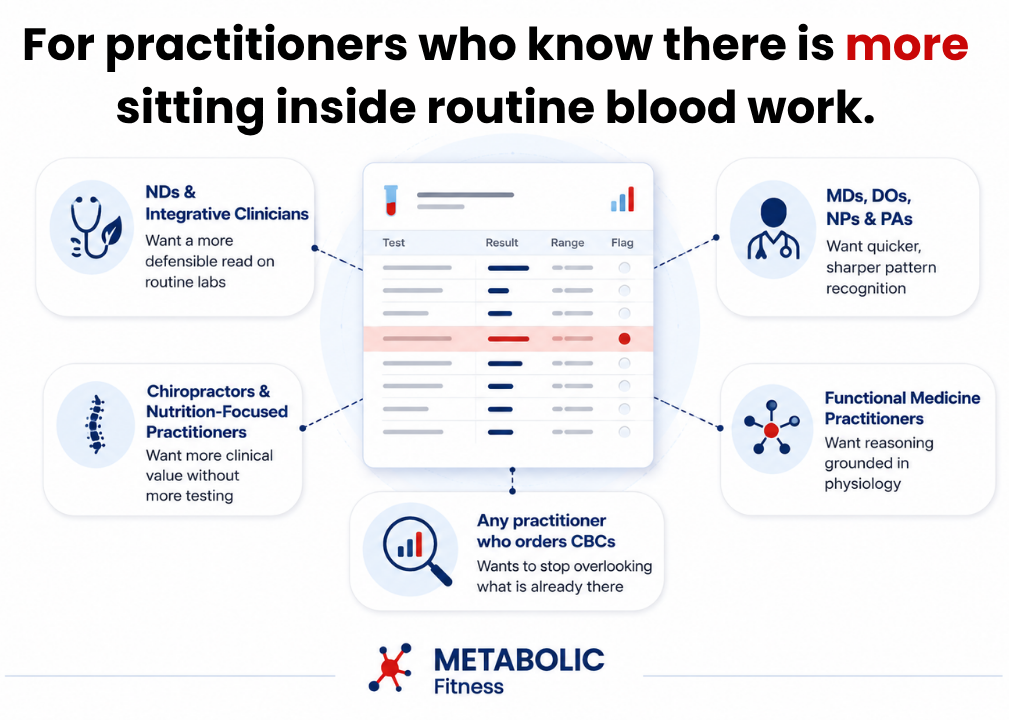
  • You review CBCs and know you were never really taught to read them deeply

  • You're tired of interpretations that sound confident but are hard to defend

  • You want more clarity before ordering another expensive specialty panel

  • You want to think more physiologically and less reflexively about abnormal findings

  • You want to get more value out of the labs already sitting in your patient's chart

Why Listen to Dr. Bryan Walsh?

Dr. Walsh spent years tracing commonly taught “optimal” interpretations back to their sources and found that many were harder to defend than they sounded. So he did the slower work: following the literature, studying the physiology, and building a more defensible way to read blood chemistry.

What he found changed how he practices entirely. The body is not making random mistakes when a marker shifts. Often it is responding to pressure, tradeoffs, and physiology the practitioner has to understand before intervening.

His approach: Less reflexive fixing. More understanding why the number moved. Better decisions because of both.
Cell Blueprint course instructor Dr Bryan Walsh sits at his desk, smiling at the camera.

He's not anti-testing. He's anti-shallow interpretation.

And he's done the work most practitioners were never shown how to do.

Watch On Your Schedule

This focused 18-minute training is available on demand, so you can watch it when it fits your clinic day.

DATE

Available Now

Time

Watch On Your Schedule

 Investment

FREE

When you register, you'll receive:

  • Immediate access to the 8-minute training
  • A clearer way to interpret one underused CBC marker
  • A direct path to go deeper if you want the full twelve-marker field guide

Reserve Your Seat Now

MOST PRACTITIONERS WERE NEVER TAUGHT HOW MUCH ONE CBC MARKER CAN REALLY TELL THEM.
THIS TRAINING SHOWS YOU WHAT THEY MISSED.

Frequently asked questions

Is this just another blood chemistry basics training?

No. This is a focused teaching on one CBC marker most practitioners see all the time but rarely fully use. The point is not more information. The point is better interpretation.

Will this still help me if I'm not a physician?

Yes. This training is relevant for NDs, DCs, NPs, PAs, RDs, and any licensed practitioner working with routine blood work.

Is this going to be a sales pitch?

No. This is a real training with something you can use immediately. At the end, you'll have the option to go deeper with The Hidden Panel if you want the full twelve-marker field guide.

How long is the training?

About 8 minutes. It was built to fit into a real practitioner's day.